What Bidibidi taught us about building energy systems that last
Bidibidi refugee settlement, Uganda — 29 July 2026
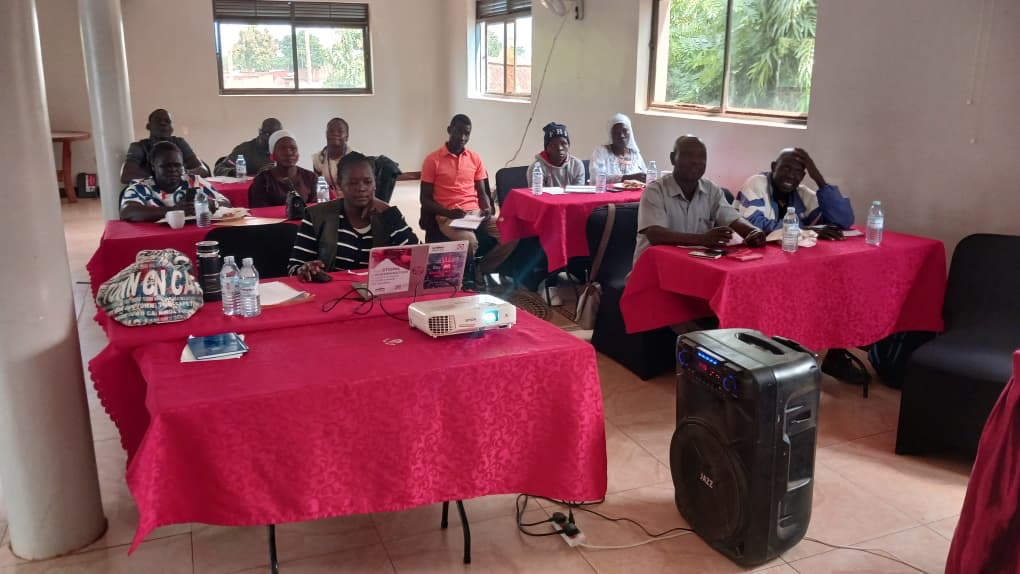
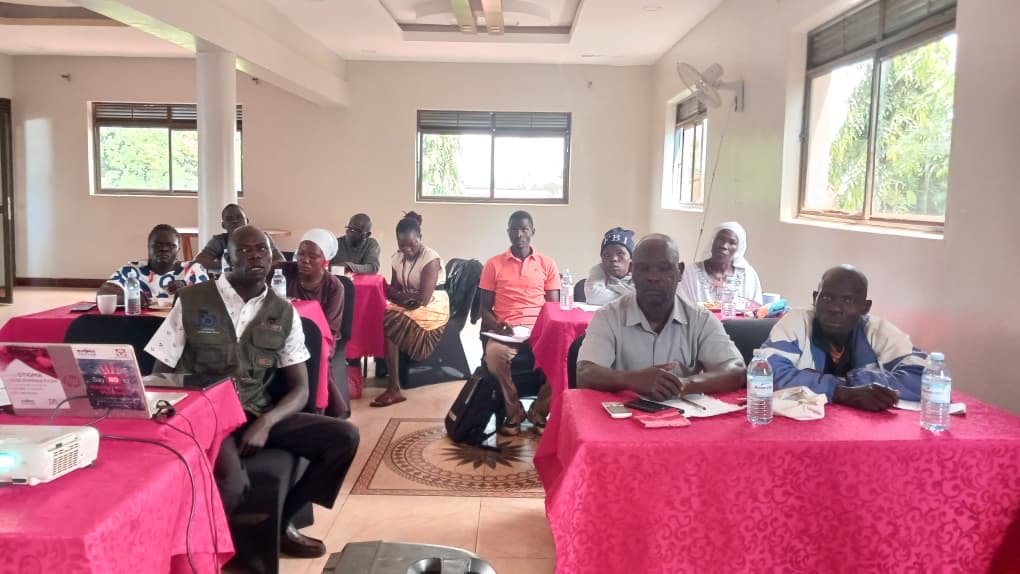
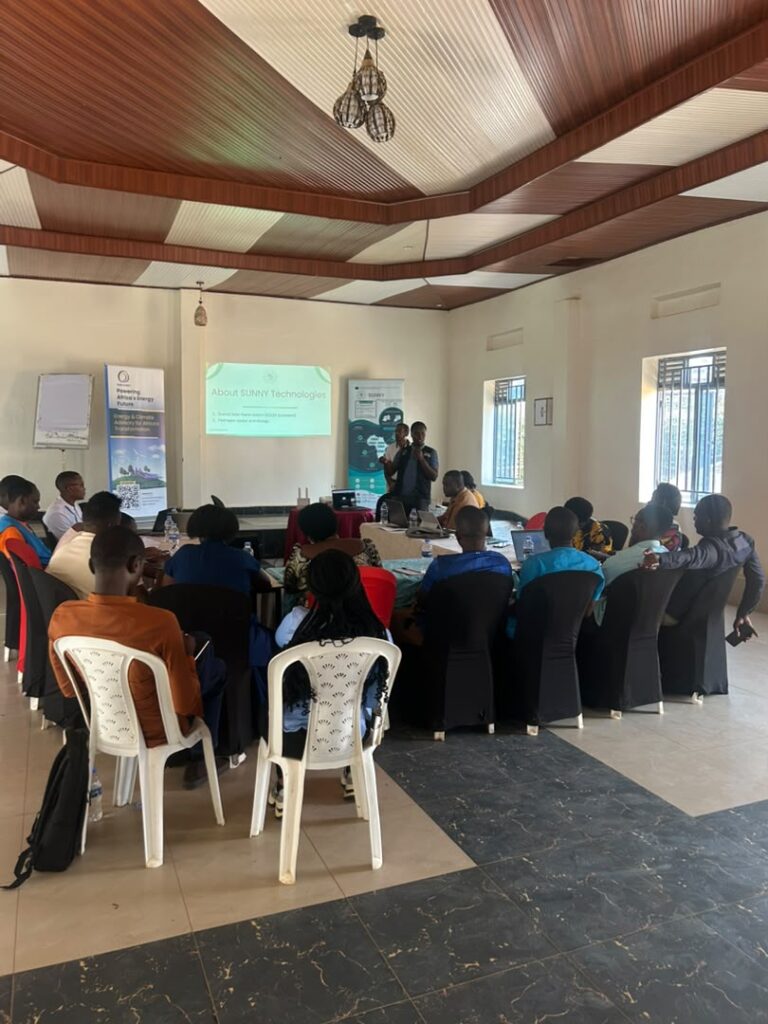
In late July, the SUNNY project held its second Multi-Actor Learning Lab (MALL) in Bidibidi, one of the world’s largest refugee settlements. The session ran in hybrid format: our partners at HUDARA facilitated on the ground, while technology partners and researchers joined remotely, in line with the risk-mitigation approach currently governing our Uganda activities. Around 29 consortium participants took part alongside refugee and host-community members from the settlement.
Heavy rainfall delayed the start by an hour and a half. Participants arrived wet and late, and the session ran anyway.
Three technologies, brought for scrutiny
The workshop put three SUNNY technologies in front of the people expected to use them.
The first was a mobile, off-grid solar refrigerated storage unit, presented under a cooling-as-a-service model at roughly USD 0.30 per crate per day, and positioned as an aggregation point to help farmers reach better market terms. The second was a community biogas cooking system, targeted initially at Lopio Technical School — a site that currently burns around 250 kg of firewood a day to cook for 270 people, some six hours and twenty minutes of cooking. The third was a smart solar irrigation system using borehole extraction, IoT control via tablet, and volumetric water tracking in litres rather than counted jerricans.
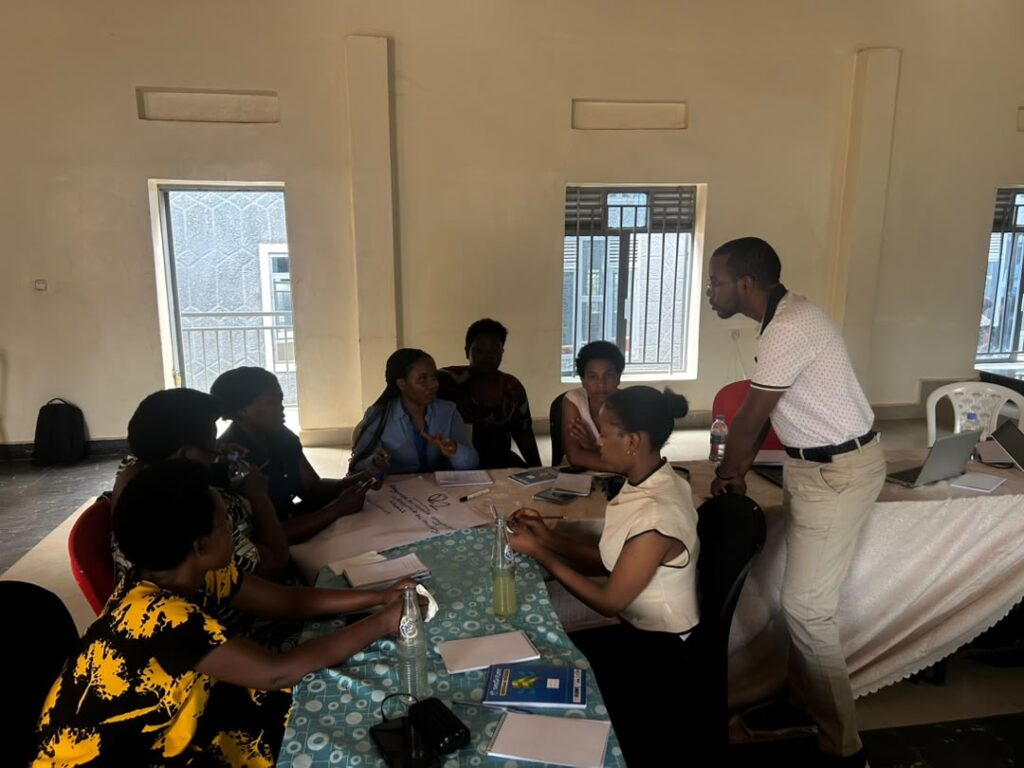
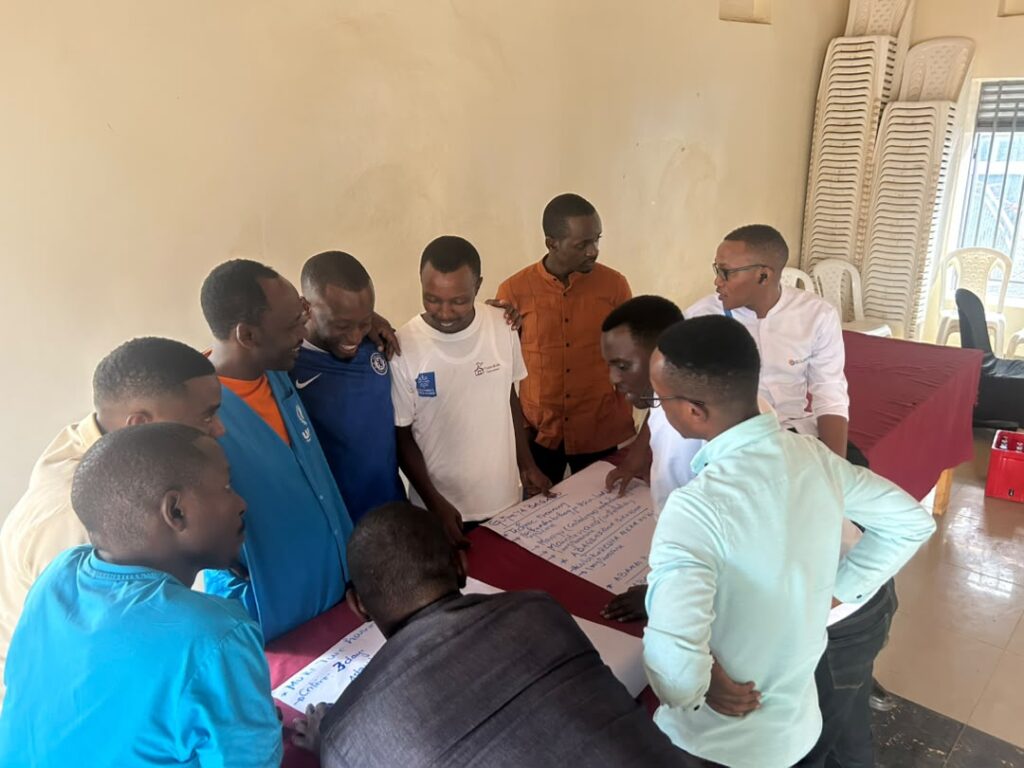
Participants split into gender-segregated breakout groups to work through design and training questions, with on-site research assistants recording group input on paper for the project record.
What came back was not polite approval.
What the community actually told us
On cold storage, participants pushed past the produce-focused design brief. Yes to vegetables and fruit — tomatoes, cabbage, onions, mangoes, pineapples. But one group raised fresh meat and milk, which spoil within 24 hours without refrigeration and are not accommodated in the current shelf configuration. Another asked about ready-cooked food. Both are now design actions rather than presentation slides. Participants also mapped demand for us: peak need falls in April and August, and the majority of supplying farmers are concentrated in Zones 3 and 5 — which should determine where the unit sits.
On biogas, the concerns were about safety and proximity. People do not want a gas-producing tank near their homes without understanding it. The response — that anaerobic digestion involves no combustion at the digester, that methane burns cleanly, that pressure monitoring, safety valves and ventilation are built in, and that the practical risks are odour management and restricting access by children and animals — was assessed by the group as preferable to leaving fermenting waste exposed. One design detail illustrates the value of asking: the waste inlet height is adjustable to around 1.5 m specifically so that users of different statures, including children, can reach it.
On irrigation, participants confirmed familiarity with tablet devices, then immediately flagged something no specification sheet catches: direct sunlight makes the screens unreadable. The system will need to be operated in shade.
They also drew us a governance map. Water User Committees oversee taps and manage distribution by limiting jerricans per family and logging flow time in record books. Village Health Teams monitor sanitary conditions. Both report upward to the Refugee Welfare Council, structured as Local Council 1–3 in mirror of Uganda’s national system. These committees already mediate disputes and negotiate adjustments between users. SUNNY’s “fair allocation” logic has to work through that structure, not alongside it.
The history that shapes every conversation
The clearest theme of the day was a pattern of failure that participants know intimately.
Cooking stoves, maintained centrally for the duration of a project and then left without training or support, broke and stayed broken. A borehole irrigation project collapsed once the community could not cover maintenance after project close — commercial replacement parts were cited at 1.9–2 million UGX and were not stocked locally. Solar systems in Zone 2 failed through inadequate training, absent follow-up and unavailable replacement batteries, pushing households back to firewood. In one case, a donor physically removed installed equipment at project close, despite having trained technicians to operate it.
A brick-production project failed for a different reason: the output didn’t match what people actually needed, traced back to insufficient consultation and unexplained use of unfamiliar inputs.
Five failures, one structural cause. Nothing was transferred — not ownership, not skills, not the ability to source a spare part.
What changed as a result
Several commitments were aligned in the room. The biogas design will prioritise simplicity and locally available materials, so that repair does not depend on an import chain. The project will install high-quality, durable equipment, explicitly rejecting the low-cost approach blamed for past failures. Long-term sustainability will rest on training local technicians and Community-Based Organisations to operate and maintain systems independently — technicians trained first, then cascading knowledge onward, with printed take-home booklets and interpretation for non-English speakers.
Community leadership formally accepted the introduction of the biogas technology. A prototype installation is targeted for November or December 2026.
Participants also proposed something we did not bring to the table: a local technician association, responding to a technician shortage across Zones 1–5 and the scarcity of spare parts. It was well received, and we intend to track it as a concrete governance deliverable rather than a nice idea from a workshop.
For shared technology, the group proposed a representative management committee with an odd number of members — five or seven, so that votes resolve cleanly — with deliberate targets for women’s representation and dedicated places for persons with disabilities. Disputes go to the local committee first, then to community leaders, and to Uganda’s Office of the Prime Minister only if unresolved.
Not everything was solved
Ten feedback surveys were completed, from respondents aged 26 to 63 and including host-community members. Ratings were strong across learning, co-creation, empowerment, social cohesion and gender — with near-universal top scores on willingness to participate again and on equitable participation.
The requests were specific and fair. More transport support, given the distances involved. Better time-keeping, and more training time overall. Venues accessible to people with disabilities, with ground-floor rooms where possible. And, from one participant, appreciation for the biogas system paired with a straightforward objection: the price is high, and a smaller, more affordable unit should be available.
Host-community respondents in particular asked that the project run through to conclusion with signed, durable commitments and periodic refresher training.
That last point is the one we intend to be held to.
One of the suggestions from the day was to add a hook, so the hydrogen storage bag can hang up.
It is a small thing. It is also exactly the kind of thing that never appears in a technology specification written elsewhere, and exactly the kind of thing that determines whether a system gets used or gets left in a corner. On 23 July, SUNNY held a Multi-Actor Learning Lab in Mahama Refugee Camp to collect changes at that level of detail — and at every level above it.
Who was in the room
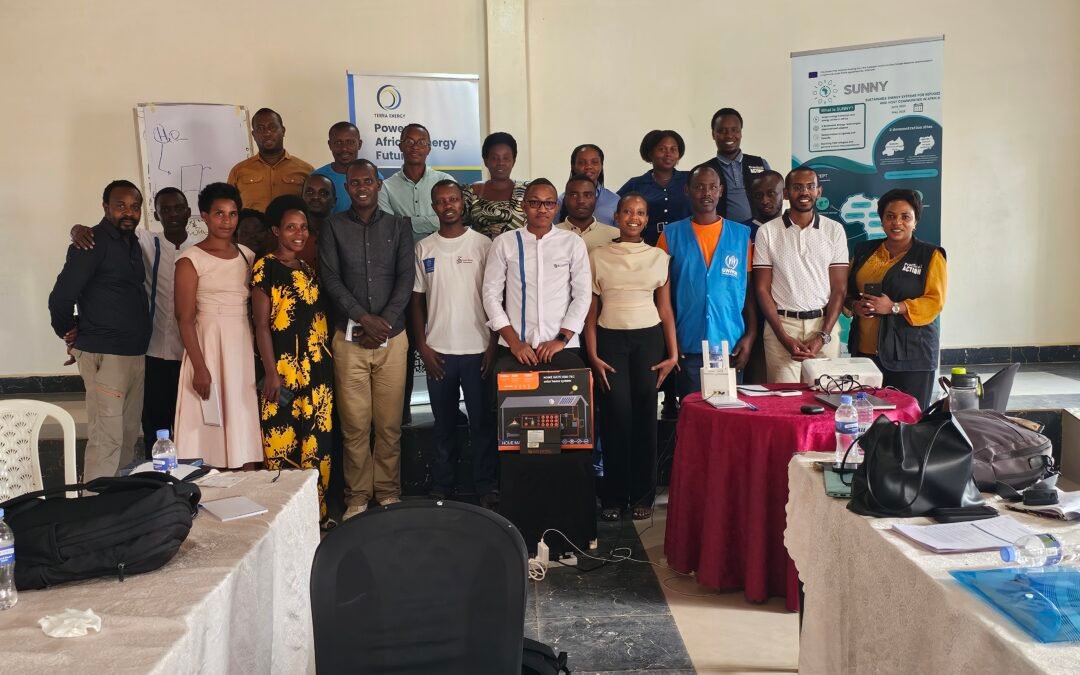
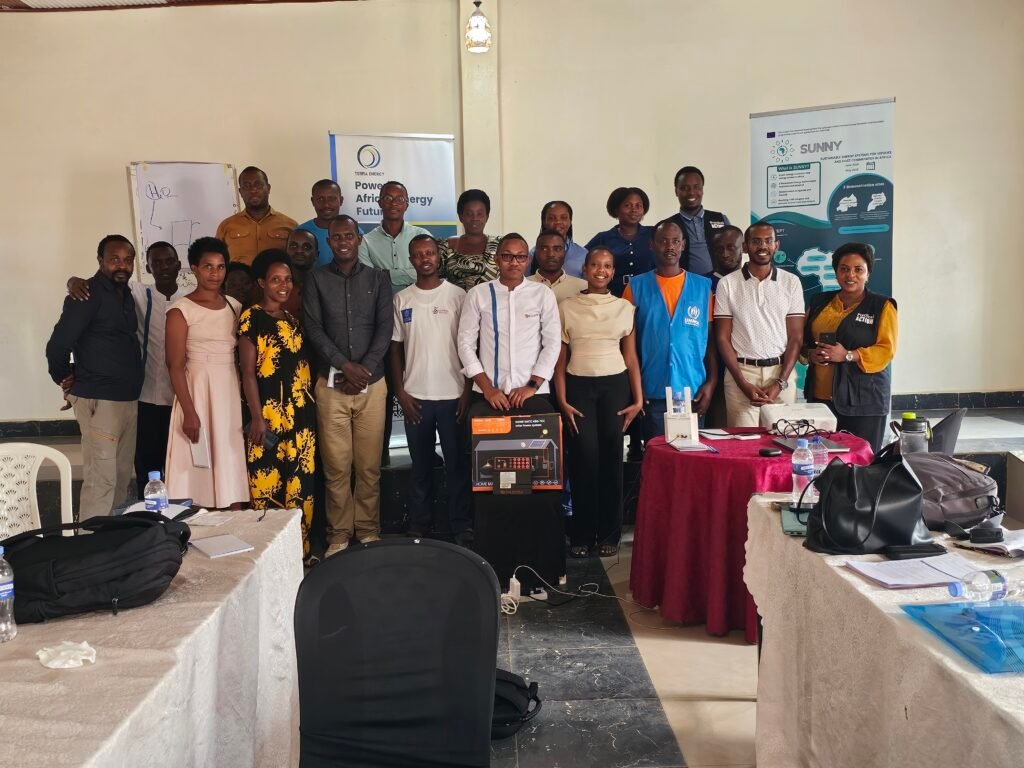
Thirteen people took part: eleven community representatives — five refugees and six from the host community, five women and six men — together with two project staff. Our partners Terra Energy organised the session, with Practical Action facilitating on the ground.
It was a small group by design, and the output density reflects it. Breakout groups were split with women convened separately, so that their input was captured distinctly rather than averaged into a mixed-group consensus. That decision produced findings that would otherwise have been lost — most notably on training delivery, further below.
Two technologies were put in front of the group for validation: a shared solar home system, developed by SOLEKTRA, and a hydrogen cooker and storage system.
What the community corrected: the solar system
The feedback on the solar home system was granular and almost entirely actionable.
Participants asked for a distinct audio alert for incorrect keypad entries, separate from any tamper or fault signal — so that a user’s own mistake isn’t confused with a system malfunction. On the tamper signal itself, the group did not converge: light, sound and image were all discussed, and the question remains open for SOLEK.
There was strong, repeated demand for wider appliance compatibility — laundry equipment, laptop charging and trimmers came up more than once, alongside a specific request for compatibility with a 12V DC iron. Participants then asked a question that pointed past the product entirely: where would they actually buy compatible appliances? That indicates a local supply-chain gap, and suggests something as simple as a recommended vendor list may need to ship alongside the hardware.
Questions on autonomy during cloudy days signalled a communications need rather than a design one: worst-case performance has to be stated clearly and realistically up front, rather than discovered in week three.
The most significant gap was commercial, not technical. The ownership and business model of the shared system were not well understood — particularly what happens to ownership once payments are complete. Terra Energy has identified the demonstration stage as the right moment to resolve this, in plain language and with visuals rather than text.
On misuse and tampering, participants were clear that consequences should be explicitly defined, and that responsible local structures should be informed when equipment is damaged. And they confirmed the upside: reliable power could support small income-generating activity, with phone charging named directly.
What the community corrected: the hydrogen cooker
Here, safety dominated.
Participants referenced prior LPG-related explosions and accidents and asked, reasonably, how a hydrogen system compares. The session ran over time on the volume of questions raised — a sign of high engagement, but also a sign that not every concern was fully resolved in the room. Participants want to see real-world examples of the technology working, which is a credibility question rather than a technical one, and one that a demonstration answers better than an explanation.
They also want to see it cook the food they actually eat, demonstrated live rather than asserted.
Practical questions clustered around the storage bag: how it gets repaired or replaced, what it weighs, what it costs. Participants proposed that bag design account for differing family sizes, so refill volumes match household need rather than a single default.
And then the group redesigned the distribution model. Rather than a single central production point, participants proposed decentralising to roughly one hydrogen production unit per eight households, cutting travel distance for refills — with community-based agents managing local bag exchange, and dedicated training for those agents.
That is not feedback on a product. That is a proposal about how the service should be structured, and it came from the people who would have to walk the distance.
The record that explains the scepticism
Underneath both discussions sat a consistent account of what has gone wrong before.
Participants described a clear mismatch between demand for renewable energy technologies and available supply. Previous donor and NGO-provided technologies were remembered for poor quality and robustness, with high failure rates — battery robustness cited specifically. After-sales service and slow repair turnaround came up repeatedly as a recurring pain point.
Battery theft was raised as a major and persistent problem. Participants’ response to it was constructive and pointed: users should not bear the full replacement cost when equipment is stolen, and a risk-sharing mechanism should be built into the business model rather than bolted on afterwards. That is now an input to WG4’s business model design.
The group made two further requests. They asked to be prioritised as beneficiaries of the pilot implementation. And they asked for visibility into how their feedback actually changes the design — a validation loop the project intends to close, at demonstration stage or through direct follow-up.
The training programme participants designed themselves
Asked how training should work, the group did not offer preferences. They specified a programme.
Three days: day one on the solar system, day two on the hydrogen cooker, day three for hands-on practice and handover, running roughly 09:00 to 15:00. Participants aged 18–45, with a gender balance target of approximately 60% female to 40% male. Attendance extending beyond direct users to technicians and local leaders — village, cell and social leaders, plus cooperative leaders — at indicative numbers of around 62 participants in-camp and 20 in the host community.
Content should cover how to use the equipment, how it works, how to maintain it, and — notably — the terms of agreement between buyer and seller. Participants want the commercial contract explained as part of the training, not separately from it.
Materials requested: pens and notebooks, visual teaching aids and a manual (imifashanyigisho), an equipment catalogue, and hands-on practical materials. A dedicated maintenance and installation track was requested alongside the general programme.
Participants recommended an explicit AGD approach — age, gender and disability — be applied to training design. And the Women’s Discussion Group flagged something specific: a rotating model where one leader or community member is trained at a time is not sufficient. They proposed mobilising volunteers to support elderly participants and to encourage wider participation, including by persons with disabilities.
On entrepreneurship training, participants proposed content by track. For hydrogen: business planning and project management, savings, finance and bank literacy, monitoring and evaluation, business leadership, innovation. For solar, they named the income-generating activities reliable power would enable — restaurant, hair salon, phone charging, cinema, delivery service.
What participants said afterwards
Ten of the eleven community participants completed the post-workshop survey, rating 26 statements across five dimensions. Respondents spanned ages 27 to 52, were close to gender-balanced, and included both refugee and host-community representatives.
Scores sat consistently at 4 and 5 across all five dimensions. Co-creation scored strongest and most uniformly of any dimension — participants felt the session genuinely built on their input. Capacity building was marginally more variable, which tracks directly with the requests for more training time.
Gender inclusion drew the most substantive open-text engagement. Most respondents framed it around equality — that everyone should be given equal opportunity, that no one should be left out, that both genders are capable. One female respondent framed it differently, and worth recording separately: that gender consideration matters because women are the ones who need this project most.
The suggestions were direct. Start on time — the single most repeated point, raised independently by several respondents. Extend the training from one day to three. Provide more hands-on materials and equipment during sessions. Include more visual aids and diagrams. And run training of trainers, to extend reach beyond the room.
We will take the timekeeping point first. It was the clearest piece of critical feedback we received, and it is the easiest to fix.
From 16 to 19 June 2025, the partners of the SUNNY Project gathered in Rwanda for the project’s second consortium meeting. The event was hosted by theUniversity of Rwanda and Practical Action, bringing together European and African partners for four days of discussions, workshops, and field visits aimed at reinforcing collaboration and aligning the project’s next steps with the realities on the ground.
This second consortium meeting was more than a progress review, it was a collective opportunity to connect research, innovation, and community needs in one of SUNNY’s key pilot regions.
Day 1: Kickoff in Kigali
The week began at the University of Rwanda College of Science and Technology in Kigali, the capital of Rwanda, where we were welcomed by representatives from key national and international institutions, including:
🏛️ Ministry of Infrastructure 🌱 Rwanda Environment Management Authority (REMA) ⚡ Rwanda Energy Group 🌍 Delegation of the European Union in Rwanda
These opening exchanges set the stage for a high-level panel discussion on the theme:
From Innovation to Integration: Powering Rwanda’s Future by Bridging the Humanitarian–Development Nexus.
The debate offered a vivid reflection of Rwanda’s current energy landscape and the challenges of ensuring sustainable access to energy for all — particularly in large communities such as Mahama Refugee Camp.
Today, around 57% of Rwandans have access to the grid, and 23% benefit from off-grid solutions which is a remarkable progress compared to just 10% fifteen years ago. Yet, as several speakers noted, generation capacity and affordability remain key bottlenecks. Discussions emphasized the potential of hydrogen technologies, but also the urgent need to address clean cooking challenges, where affordability of alternatives to firewood and charcoal remains a barrier.
“Clean cooking is within our reach through technology and policy,” one participant noted, “but economic realities and implementation challenges still stand in the way, particularly for vulnerable and refugee populations.”
Speakers underlined that the main barrier is not technological, but social: how to support communities through the transition toward new energy practices. Examples included work with schools transitioning from petrol gas to biogas, and the importance of co-creating solutions with communities to ensure they fit local contexts and habits.
“Without co-creation, the green transition will not be possible,” emphasized one panelist.
The session also explored how technical partners and renewable energy providers collaborate with refugee communities. Solektra Rwanda, for instance, shared their model: combining government subsidies (in partnership with Practical Action) to make clean energy affordable, while training local men and women to operate and maintain the systems. This approach not only improves energy access but also builds local ownership and technical capacity.
From the academic perspective, the University of Rwanda highlighted its pivotal role in bridging the gap between energy potential and practical implementation across the continent.
“Africa is rich in energy resources — wind, hydropower, solar — but faces a critical gap between access and application,” a university representative explained. “Education is the key to closing that gap. By training engineers and technicians, we empower young people to lead the transition.”
The morning continued with presentations from two sister projects:
HEED, presented by Prof. Elena Gaura (Coventry University), which works with refugee communities in Rwandan camps, and
SWARM-E, presented by Dr. Raluca Dumitrescu (MicroEnergy International), focusing on sustainable and affordable energy access across Sub-Saharan Africa.
These contributions helped situate SUNNY within a broader ecosystem of initiatives striving to advance inclusive and resilient energy solutions across the region.
In the afternoon, the consortium traveled east to the country in the Kirehe District, where partners would continue their work closer to the Mahama Refugee Camp, one of the project’s two pilot areas. The day concluded with a shared dinner at the East Gate Hotel, setting the tone for productive collaboration.
Panel discussion Kickoff in the University of Rwanda
Day 2: Consortium Discussions and Technology Workshops
The second day of the meeting took place at the East Gate Hotel in Kirehe, bringing together all SUNNY partners for a full day of exchanges, coordination sessions, and workshops.
We first received an in-depth briefing on the current situation in Mahama Refugee Camp, home to over 70,000 registered refugees by Mr Benon Odora Reach, Representative of UHNCR and head of south office in Mahama:
“Mahama continues to receive new arrivals, mainly from Sudan, Burundi, and the DRC,” he explained. “The population is growing, yet resources are shrinking. This creates profound challenges for energy, shelter, water, and essential services.”
He detailed how austerity measures and funding shortages have led to reductions in food assistance; down by about 50%; and cuts to health services and educational programs. Some humanitarian partners have even had to cease operations due to resource constraints, resulting in overcrowded classrooms and increased social vulnerabilities, particularly among children, the elderly, and women.
Energy Access: A Core Challenge
Energy remains one of the camp’s most pressing concerns. When Mahama opened in 2015, firewood was the only available cooking fuel. In line with Rwanda’s national policy to transition toward clean cooking solutions, UNHCR introduced briquettes and liquefied petroleum gas (LPG). Initially, all households received LPG cylinders, but budget limitations forced a shift toward a targeted assistance model, based on vulnerability criteria:
1️⃣ Most vulnerable – full energy support 2️⃣ Moderately vulnerable – partial assistance 3️⃣ More autonomous households (with income sources or small businesses) – limited or no support
However, as resources have declined further, cash-for-energy assistance was discontinued in 2025, and UNHCR is currently exploring alternatives to LPG, which is both costly and logistically unsustainable.
“Sustainability is not just financial,” Mr. Reach noted. “It’s also about supply chains, maintenance, and building local markets. For instance, replacing or sourcing LPG cylinders locally remains a major hurdle — they often need to be imported from Asia, and service providers are limited.”
Local Partnerships and Innovation
Despite these challenges, the camp has seen encouraging initiatives from partners such as Practical Action, which implemented the RE4R (Renewable Energy for Refugees) project. This initiative provided solar-powered street lighting and promoted clean cooking solutions, greatly improving safety and energy access in the community. Other innovative approaches, like Results-Based Financing for Refugees (RB4R), have supported women entrepreneurs in the clean cooking sector — a model aligning closely with SUNNY’s goals of empowerment and sustainability.
A key takeaway from the discussion was the need for stronger private-sector engagement and more collaboration between NGOs, companies, and local authorities to build reliable, affordable, and locally owned energy systems. As Mr. Reach emphasized:
“Energy and healthcare are our most expensive priorities. We need innovation, yes — but also partnership. Co-creating solutions with host communities is essential if we want lasting impact.”
Then the consortium reviewed the progress of each work package (WP1, WP2, WP3) addressing both achievements and remaining challenges.
Highlights included:
WP1: Contextual analysis and community engagement (led by TUB), refining how SUNNY aligns technological design with local socio-economic realities.
WP2: Local value chains and capacity building (led by Hudara), presenting approaches for collaborative training and skills transfer.
WP3: Technologies design and upgrade (led by TE), showcasing advances in the integration of sustainable technologies.
In the afternoon, partners took part in an interactive Technology Workshop, exchanging ideas on the integration of modular solar solutions, improving design resilience, and enhancing the interoperability of SUNNY’s systems. Together, participants evaluated the project’s technologies through five key lenses — economic and business models, environmental impact, regulatory context, implementation feasibility, and social considerations.
These sessions fostered dynamic cross-disciplinary dialogue, encouraging partners to connect technical innovation with the broader social and environmental objectives that define SUNNY’s mission.
Day 3: Field visit to Mahama Refugee Camp
The third day took the consortium to Mahama Refugee Campand Settlement, one of the largest in Rwanda, home to tens of thousands of people. This day was the highlight of the week, combining technical workshops with first-hand engagement with local actors.
Morning sessions covered:
Replication and governance planning (ENERGIES 2050)
Community mapping (Hudara)
Environmental KPIs and eco-design (ReFuse)
Entrepreneurship insights from Inkomoko Rwanda
Workshops presentation day 3
In the afternoon, participants joined a comprehensive field visit, organised with the support of UNHCR and MINEMA. The visit included:
The solar minigrid powering local infrastructure,
The water treatment and irrigation plant,
A walkthrough of the Business Centre,
Exchanges with the Refugee Leader Committee,
And a visit to Solektra Rwanda Ltd, showcasing local renewable energy solutions.
These moments on the ground provided vital feedback to the consortium: a tangible understanding of the energy infrastructure’s functioning, the economic dynamics of refugee-led businesses, and the human impact of energy access initiatives.
Mahama CampMahama Refugee Settlement Business Center
Solar minigrid infrastructureWater treatment plant
Day 4: Back to Kigali
The final day marked the end of an inspiring week of collaboration and exchange. After an early departure from Kirehe, the consortium made its way back to Kigali, where partners gathered for a joint lunch and final reflections on the week’s achievements.
In the afternoon, Practical Action had prepared a special group activity — a lively traditional Burundian and Rwandan dance workshop ! Guided by local performers, partners learned the rhythmic movements and cultural meanings behind the dances, which celebrate community, resilience, and togetherness. The session offered a joyful moment of cultural immersion and team-building, perfectly capturing the spirit of SUNNY’s collaboration between European and African partners.
As the meeting came to a close, participants shared key takeaways from the week: the value of grounding innovation in local realities, the importance of inclusive participation, and the strength that comes from truly transnational cooperation.
Partners left Rwanda with a renewed sense of purpose — inspired by the dedication of local actors, the resilience of refugee communities, and the potential of SUNNY’s integrated approach to energy access, entrepreneurship, and environmental sustainability.
The Kigali sessions brought the consortium meeting full circle: from discussions on innovation and integration to a lived experience of connection, culture, and shared vision for a sustainable future.
Looking Ahead
This consortium meeting marked an important milestone in SUNNY’s journey. The exchange between research, policy, and community perspectives helped sharpen the project’s vision and ensured that technical innovation remains grounded in local ownership and social inclusion.
A heartfelt thank you to our hosts at the University of Rwanda and Practical Action, and to all partners and local stakeholders who contributed to making this meeting a success.
Insights from Bidibidi: A holistic approach on Biowaste
How can organic waste in refugee settlements be transformed into a valuable resource for sustainable energy and circular economies? As part of the SUNNY Work Package 1 (WP1) Comparative analysis of local context which (UMAK), explores the cultural and socio-environmental landscape of the demo site, ReFuse is tackling this question with a holistic approach on Biowaste. With support from CTEN and Makerere University (UMAK), our team conducted field assessments using Semi-Structured Questionnaires (SSQ), Key Informant Interviews (KII), and Geo-tagging/co-Mapping (MAP).
Image : Rubbish pit in the Bidibidi Settlement – SSQ
In places like Bidibidi Settlement and the surrounding Yumbe District in Uganda, poor waste management poses a daily challenge for both refugee and host communities. Open dumping and burning have become the norm, posing serious health and environmental risks. Yet, this problem also holds untapped potential. In Uganda, biowaste can account for up to 88.5% of total waste generation. Despite this massive volume, there’s still a significant knowledge gap in how organic waste like food scraps and agricultural residues is managed from disposal to recycling.
Handling biowaste as a resource
Through proper treatment and valorization, organic waste can be transformed into valuable bioproducts and bioenergy, creating economic benefits while reducing environmental impact. Authorities such as NEMA and MEMD highlighted in their national policies how they recognized the potential of biowaste. Efforts were put to promote composting and reprocessing through initiatives that could contribute to a more sustainable energy mix, lessening reliance on firewood.
On the Front line
For two weeks, a team of 6 researchers surveyed and mapped all five zones in Bidibidi Settlement. We spoke direclty with community members who shared everyday struggles. Conversations with refugees highlighted the urgent need for biowaste management and disposal solutions. Most refugees revealed that organic waste coming from foodleftovers, vegetables peels and green stems are thrown in mixed rubbish pit – a dug hole in the ground. One resident from the host community shared that these pits are often uncovered and exposed to wind and rains which causes waste to spread, building up near homes, contaminating water sources, harming soil, and triggering health issues like diarrhea and respiratory infections. they then added, that pests and animals scavenge through the waste, making the situation worse. Despite these difficulties, there’s momentum on the ground. Refugee-led initiatives experimented with composting and making briquettes as alternatives to charcoal. But these efforts were lost due to lack the infrastructure, technical training, and support to thrive.
Our assessment covered 105 SSQs, 42 KIIs, and 40 MAP activities. This data underscore tthe urgent need and the potential for better biowaste management. However, several challenges like the vast distances between zones, the absence of organized collection systems, and low awareness are real.
Through SUNNY, ReFuse aims to support the integration of SUNNY technologies and minimize waste related socio-environmental impact. To address this aspect of the problem, ReFuse will provide expertise in creating circular value chains. The focus of the next field visits will be on two key actions: (1) Empower existing and/or new local entrepreneurship projects/ initiatives (building market based solutions) (2) Advise a waste management plan together with the development organisations working in Bidibidi, Yumbe district, and community members.
Our role is to contribute in increasing SUNNY’s capacity on waste management while championing local circular economies that leave no one behind
Understanding Dry waste dynamics: Insights from Mahama Camp, Rwanda and Bidibidi Settlement, Uganda
A new assessment conducted as part of the SUNNY Work Package 2 (WP2) provides insights into dry waste production, recycling behavior, and local market dynamics in two key sites: Mahama Camp in Rwanda and Bidibidi Settlement in Uganda, along with their surrounding host communities. The study contributes to broader efforts aimed at fostering sustainable waste management practices and enabling circular value chains in humanitarian contexts. With support from CTEN and Makerere University (UMAK) in Uganda. And, Practical Action (PA), CTEN and University of Rwanda, field data collection in both locations combined Semi-Structured Questionnaires (SSQ), Key Informant Interviews (KII), and Mapping (MAP) activities.
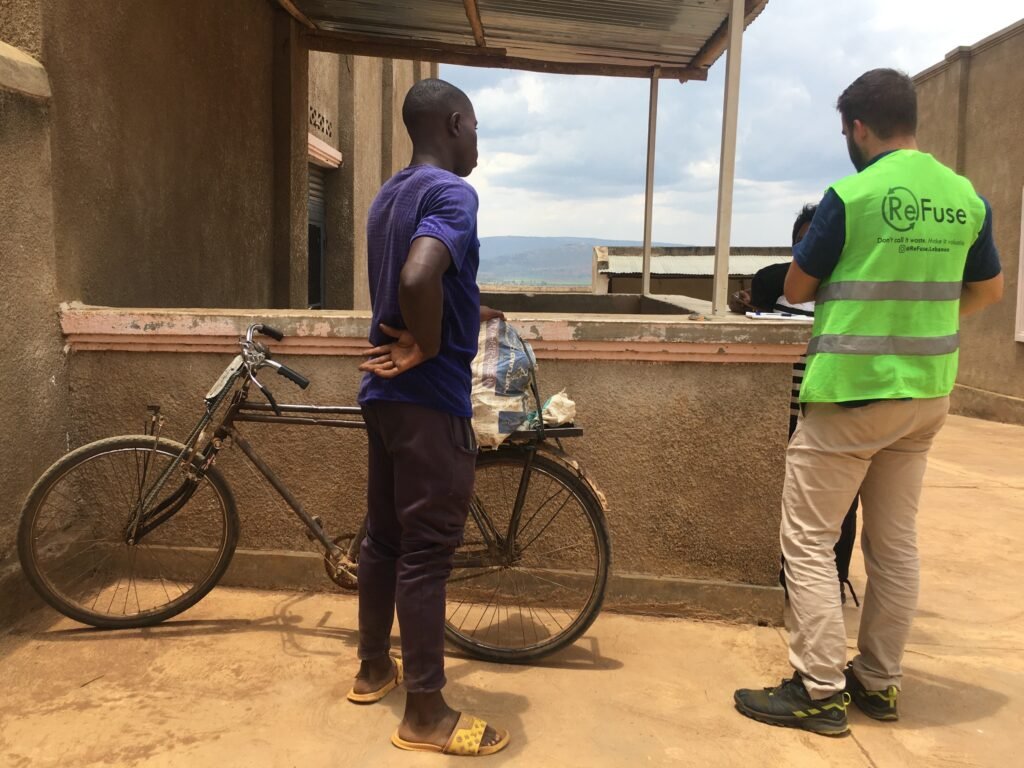
Image: Waste picker in Mahama Camp – KII
In many refugee-hosting regions across Africa, waste management systems remain underdeveloped or non-existent, especially when it comes to dry waste. Plastics, textiles, paper, and metal often accumulate without proper disposal pathways, contributing to environmental and public health risks. While most interventions have focused on food and shelter, solid waste -especially non-biodegradable materials- is becoming a critical concern in long-term displacement settings.
Observed practices
Preliminary findings indicate that plastic waste, primarily from food packaging, water sachets, bottles, and household containers, is the most common form of dry waste in both Mahama and Bidibidi. Other categories include textiles (clothing), paper, and some scrap metal. In both sites, dry waste is generally not segregated at source. In Uganda, it is either burned, buried, or dumped in open spaces near homes or in informal pits. While in Rwanda, with the support of UNHCR and World vision, a system is put in place. Community members reported taking their mixed waste to specific collection sites scattered around the camp. As also observed, many residents from the host community also use the same dumping points as there is no collection service.
Recycling behavior and repair market
The study also explored community attitudes toward recycling and reuse. Across both camps, there is some awareness of the potential benefits of recycling, particularly among youth and informal small-scale traders. For instance, in Uganda they are identified as ‘KiloKilo’ and ‘ChumaChuma’, they mostly collect hard plastic and mixed metals, while in addition to that, ‘injemini’ in Rwanda collect rubber shoes known as ‘sweeties’. Five informal traders were sampled in Rwanda, and eight in Uganda. Those traders rely heavily on waste pickers which usually travel by foot or on a bike and go around the villages to recover recyclables from community members in exchange of a small incentive . One shared that prices are inconsistent, and despite the logistical barrier that make it difficult to scale up collection and resale operations, there is untapped market for recycling streams.
Both refugees and host community members in both sites identified existing repair providers operating inside and outside the camp. Some participants referenced locations and moving sellers where second-hand goods could be purchased or repaired, though their operations remain informal and irregular. These findings suggest that the current repair and reuse ecosystems are informal and underutilized, yet present an important opportunity to divert materials from landfills and extend product lifecycles.
The findings from Mahama and Bidibidi highlight the potential and the limitations of introducing circular waste solutions in refugee settings. While dry waste is abundant and there is growing community interest, any intervention must address the infrastructural gaps, social perceptions, and market constraints. Through SUNNY, ReFuse, is working to support the adoption of SUNNY technologies while leveraging its expertise in developing circular value chains to shift recyclables from landfills. The focus of the WP2 field visits will be on two key actions: (1) Empower existing and/or new local entrepreneurship projects/ initiatives (building market based solutions) (2) Advise a waste management plan together with the development organisations working in the camps, Local authorities, and community members.
At ReFuse, we believe value can be created anywhere, especially in places where others only see garbage, because we refuse to call it waste, we make it valuable



 English
  Français
  Kinyarwanda