
What Bidibidi taught us about building energy systems that last
Bidibidi refugee settlement, Uganda — 29 July 2026
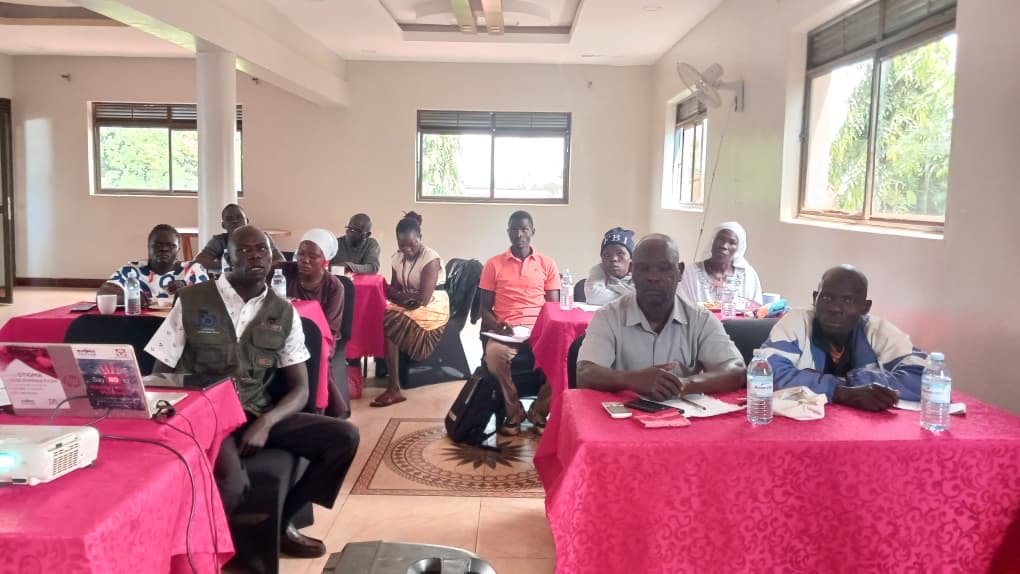
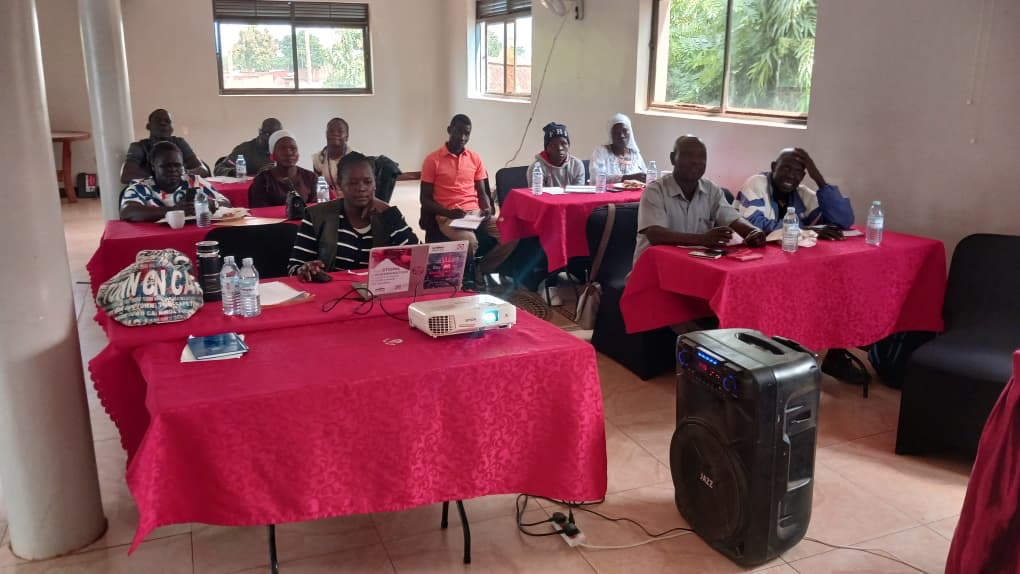
In late July, the SUNNY project held its second Multi-Actor Learning Lab (MALL) in Bidibidi, one of the world’s largest refugee settlements. The session ran in hybrid format: our partners at HUDARA facilitated on the ground, while technology partners and researchers joined remotely, in line with the risk-mitigation approach currently governing our Uganda activities. Around 29 consortium participants took part alongside refugee and host-community members from the settlement.
Heavy rainfall delayed the start by an hour and a half. Participants arrived wet and late, and the session ran anyway.
Three technologies, brought for scrutiny
The workshop put three SUNNY technologies in front of the people expected to use them.
The first was a mobile, off-grid solar refrigerated storage unit, presented under a cooling-as-a-service model at roughly USD 0.30 per crate per day, and positioned as an aggregation point to help farmers reach better market terms. The second was a community biogas cooking system, targeted initially at Lopio Technical School — a site that currently burns around 250 kg of firewood a day to cook for 270 people, some six hours and twenty minutes of cooking. The third was a smart solar irrigation system using borehole extraction, IoT control via tablet, and volumetric water tracking in litres rather than counted jerricans.
Participants split into gender-segregated breakout groups to work through design and training questions, with on-site research assistants recording group input on paper for the project record.
What came back was not polite approval.
What the community actually told us
On cold storage, participants pushed past the produce-focused design brief. Yes to vegetables and fruit — tomatoes, cabbage, onions, mangoes, pineapples. But one group raised fresh meat and milk, which spoil within 24 hours without refrigeration and are not accommodated in the current shelf configuration. Another asked about ready-cooked food. Both are now design actions rather than presentation slides. Participants also mapped demand for us: peak need falls in April and August, and the majority of supplying farmers are concentrated in Zones 3 and 5 — which should determine where the unit sits.
On biogas, the concerns were about safety and proximity. People do not want a gas-producing tank near their homes without understanding it. The response — that anaerobic digestion involves no combustion at the digester, that methane burns cleanly, that pressure monitoring, safety valves and ventilation are built in, and that the practical risks are odour management and restricting access by children and animals — was assessed by the group as preferable to leaving fermenting waste exposed. One design detail illustrates the value of asking: the waste inlet height is adjustable to around 1.5 m specifically so that users of different statures, including children, can reach it.
On irrigation, participants confirmed familiarity with tablet devices, then immediately flagged something no specification sheet catches: direct sunlight makes the screens unreadable. The system will need to be operated in shade.
They also drew us a governance map. Water User Committees oversee taps and manage distribution by limiting jerricans per family and logging flow time in record books. Village Health Teams monitor sanitary conditions. Both report upward to the Refugee Welfare Council, structured as Local Council 1–3 in mirror of Uganda’s national system. These committees already mediate disputes and negotiate adjustments between users. SUNNY’s “fair allocation” logic has to work through that structure, not alongside it.
The history that shapes every conversation
The clearest theme of the day was a pattern of failure that participants know intimately.
Cooking stoves, maintained centrally for the duration of a project and then left without training or support, broke and stayed broken. A borehole irrigation project collapsed once the community could not cover maintenance after project close — commercial replacement parts were cited at 1.9–2 million UGX and were not stocked locally. Solar systems in Zone 2 failed through inadequate training, absent follow-up and unavailable replacement batteries, pushing households back to firewood. In one case, a donor physically removed installed equipment at project close, despite having trained technicians to operate it.
A brick-production project failed for a different reason: the output didn’t match what people actually needed, traced back to insufficient consultation and unexplained use of unfamiliar inputs.
Five failures, one structural cause. Nothing was transferred — not ownership, not skills, not the ability to source a spare part.
What changed as a result
Several commitments were aligned in the room. The biogas design will prioritise simplicity and locally available materials, so that repair does not depend on an import chain. The project will install high-quality, durable equipment, explicitly rejecting the low-cost approach blamed for past failures. Long-term sustainability will rest on training local technicians and Community-Based Organisations to operate and maintain systems independently — technicians trained first, then cascading knowledge onward, with printed take-home booklets and interpretation for non-English speakers.
Community leadership formally accepted the introduction of the biogas technology. A prototype installation is targeted for November or December 2026.
Participants also proposed something we did not bring to the table: a local technician association, responding to a technician shortage across Zones 1–5 and the scarcity of spare parts. It was well received, and we intend to track it as a concrete governance deliverable rather than a nice idea from a workshop.
For shared technology, the group proposed a representative management committee with an odd number of members — five or seven, so that votes resolve cleanly — with deliberate targets for women’s representation and dedicated places for persons with disabilities. Disputes go to the local committee first, then to community leaders, and to Uganda’s Office of the Prime Minister only if unresolved.
Not everything was solved
Ten feedback surveys were completed, from respondents aged 26 to 63 and including host-community members. Ratings were strong across learning, co-creation, empowerment, social cohesion and gender — with near-universal top scores on willingness to participate again and on equitable participation.
The requests were specific and fair. More transport support, given the distances involved. Better time-keeping, and more training time overall. Venues accessible to people with disabilities, with ground-floor rooms where possible. And, from one participant, appreciation for the biogas system paired with a straightforward objection: the price is high, and a smaller, more affordable unit should be available.
Host-community respondents in particular asked that the project run through to conclusion with signed, durable commitments and periodic refresher training.
That last point is the one we intend to be held to.
 Kinyarwanda
  English
  Français